

Practice examination
Question 21 (20 marks)
Question 22 (20 marks)
Most NSW students rate HSC English as their most challenging subject. It's mandatory, it counts towards your ATAR, and your success depends on an unseen prompt, not memorised content.
What you receive
A place in Years 11–12 comes with four things. Every student gets all four.
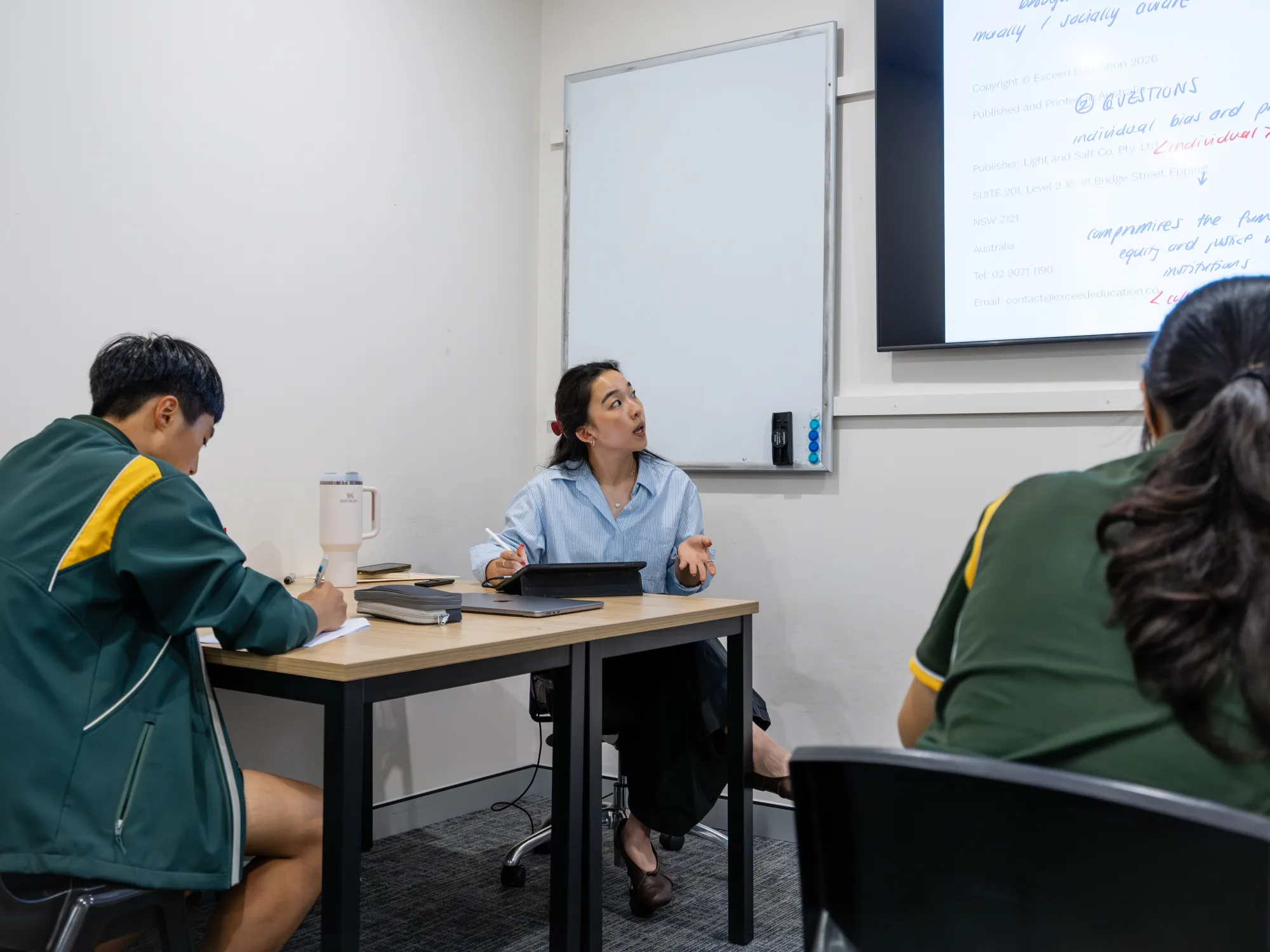
Learn alongside others. Improve with intention.
Small-group lessons grouped by Focus Area and Prescribed text, so the two hours are spent on the text you are actually sitting the exam on.
School-specific classes are available when at least four students from the same school enrol.
Question 21 (20 marks)
Question 22 (20 marks)
The argument is carried by the verb, not the quotation.

Material built around your prescribed text and the new syllabus.
Focus Area booklets written for the 2027 syllabus and worked around the texts your school sets, with timed practice papers. No generic course material, hundreds of pages long.
‘To reimagine a text is to argue with it.’ To what extent does this reflect your understanding of both texts?
Atwood does not update Shakespeare so much as cross-examine him, and the quarrel is conducted in the one register the play reserves for confession.
Where Prospero abjures his art in the measured cadence of blank verse, Felix forfeits his in a sentence so plain it embarrasses him. The concession is the same; the cost is not.
The reimagining therefore reads less as homage than as an audit of what the original was willing to leave unexamined — a debt the later text insists on settling in public.
What the later text will not do is forgive by default. Every mercy in it is argued for, and the argument is the reimagining.
That is the difference a century of reading makes: not a kinder ending, but a stricter one.
See what a Band 6 on your text actually looks like.
Exemplar essays on the prescribed texts, annotated by experienced tutors, so you understand not only what works but why, before you write your own.
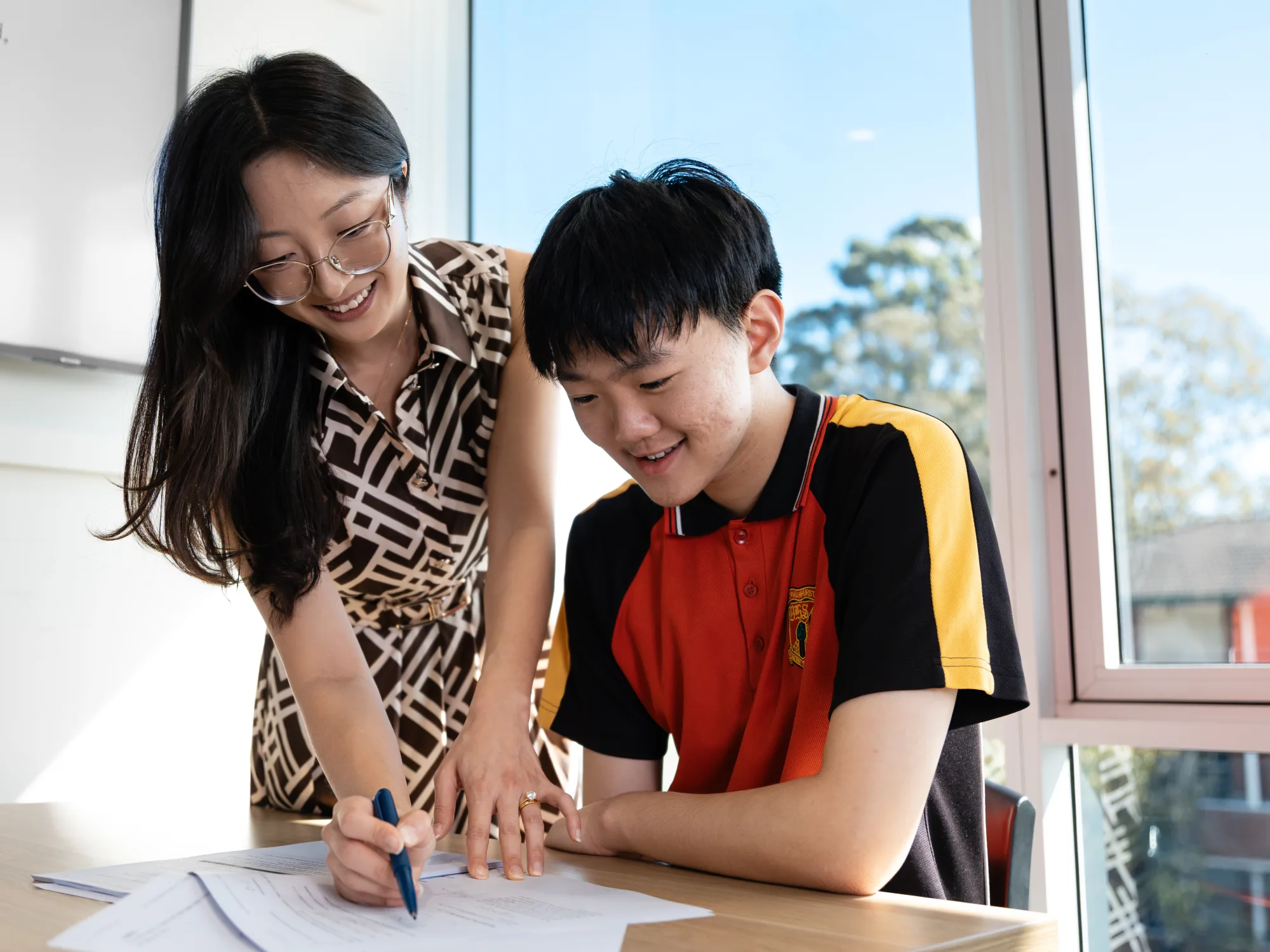
Know exactly where the marks went, within 72 hours.
Precise feedback that targets where you are losing marks and explains why and how to fix it, across multiple rounds, until the master script is ready for an unseen question.
1 of 4: Group classes
Exceed's Stage 6 course is designed by a state-ranking HSC English teacher currently working in NSW schools, and is built around the new syllabus, your school's prescribed texts and assessment tasks, and the real skills required to succeed in the HSC examination.
No hours-long lectures or irrelevant slides. No generic course material, hundreds of pages long. No waiting a week for feedback that arrives after your task due date. No rote learning of tutor-written generic essays that can't be applied to unseen essay questions.
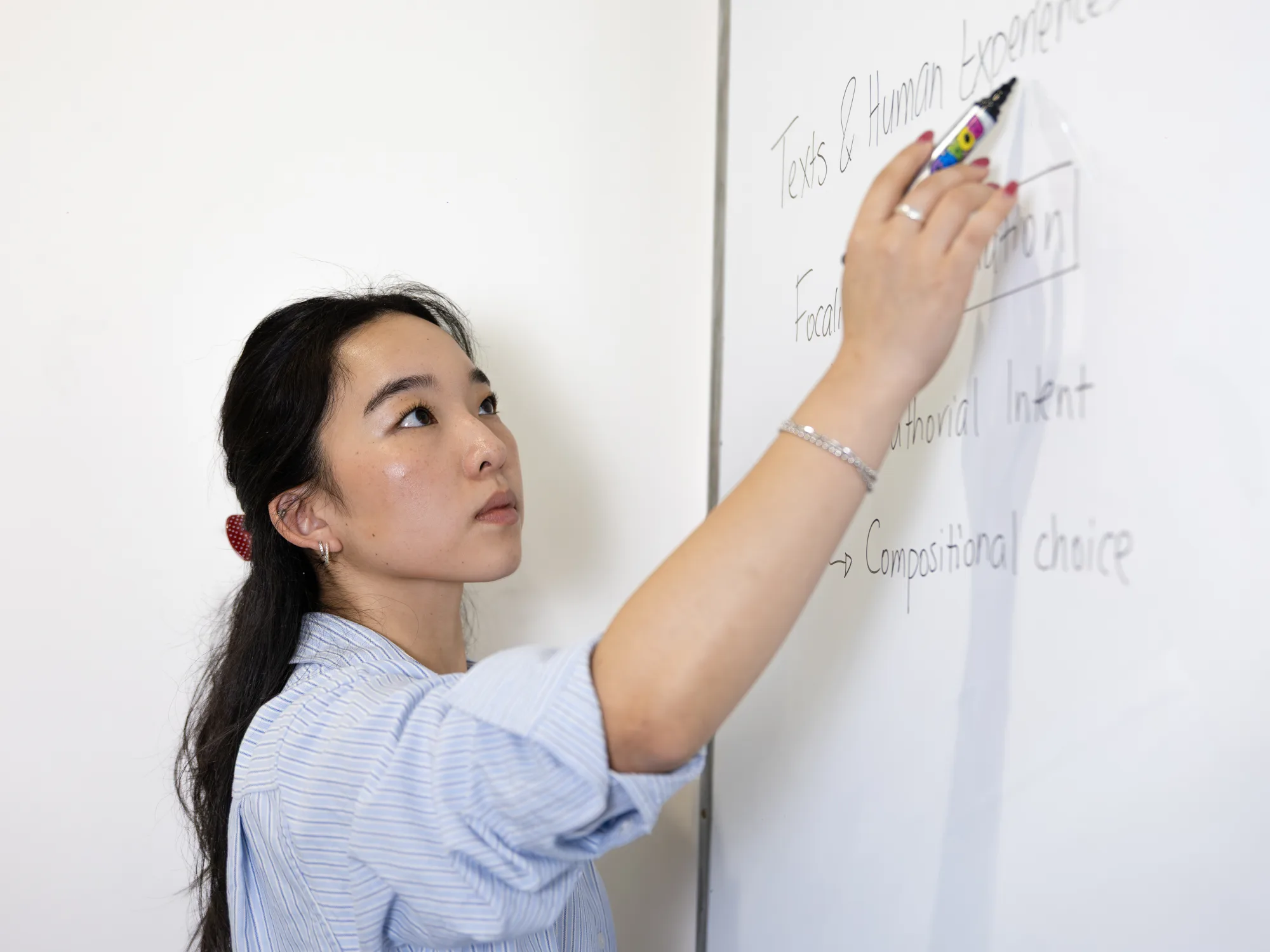
We front-load core content so that our students can start preparing for assessment tasks and exams ahead of time. Before you write a word, you'll know how the text maps to every line of the rubric, the theory and critical opinions relevant to your focus area, and how to weave specific context into an essay. Then we go granular with macro-level analysis of form, micro-level analysis of language features, and the overarching ideas that will form your bank of paragraphs.
We explicitly teach you how to plan and build your essay: refining and synthesising your ideas into a persuasive thesis, clear topic sentences, and cohesive paragraphs that support a compelling evaluation. Most students dive into essay writing armed with only a mishmash of quotes, analysis, and ideas they've collected — and the result is a convoluted, weak essay that strings together disconnected observations, themes, and pretentious language, rather than a cogent, persuasive essay built on precise evaluation and analysis of the text and focus area.
Within 72 hours, we provide precise feedback that targets exactly where you're losing marks and explains why and how to fix it. Your first draft is your worst draft: your best work only emerges through sustained editing and feedback. In the HSC, your essay will be read alongside other students' 'perfected' essays, which may have undergone dozens of rounds of editing.
We break down essay questions and Craft of Writing prompts specific to your text, so you see, in real time, what a 20/20 approach looks like: the thought process, the steps, and the finished essay plan. Preparing and memorising a near-perfect essay is only half the battle. The other half awaits you in the HSC exam, in the form of unseen texts, unseen questions, and unseen prompts. A well-prepared student cannot be surprised by the exam.
What we cover
Year 11 Advanced, then the four HSC focus areas. Your school chooses which of NESA's prescribed texts you study — we teach the ones you are set.
| Focus Area | What it involves | Prescribed texts |
|---|---|---|
Year 11 AdvancedYear 11 courseReading to Write; Narratives that Shape our World; Critical Study of Literature.NESA syllabus (opens in a new tab) |
| No NESA prescriptions in Year 11 — your school sets the texts. We build the course around the ones you are given. |
| Prose fiction
Poetry
| |
| One pair, studied together
| |
| Prose fiction
Poetry
Drama
| |
| None. The Craft of Writing has no prescribed texts. |
Texts are NESA's English Advanced prescriptions for the HSC from 2027, extended to 2030. NESA's full prescriptions list
Classes
Sydney time. No classes in the school holidays.
Year 11 students begin the HSC course in Term 4, so they are taught in the Year 12 classes below.
No class

No class
Year 12 classes are named for their set text or, for a school-specific class, the school. If you would like a text-specific or school-specific class that isn't listed, we need at least four students to consider opening one.
Enquire through the website, and we will get back to you to book in a consultation.
Attend your one-on-one consultation (priced at $100 per subject), in Epping. If you go ahead with lessons, the $100 is taken off your first invoice. Bring the essay and its feedback sheet.
You’ll start with knowledge of where the gaps are, what we’d do about them, and whether Exceed is the right fit.